History

Of the more than 30 pottery factories that were located in and around Delft around the middle of the 17th century, De Koninklijke Porceleyne Fles is the only one that has survived.

It is not certain exactly when the first workshops were established. However, it is known that in other places, such as Amsterdam, Haarlem, and Middelburg, pottery with multicolored decorations on a white background was already being made in the second half of the 16th century. This was done using a technique that Dutch potters had learned from their Italian colleagues. It is likely that the first company in Delft was not established until the end of the 16th century.

The situation changed when the Watergeuzen (Sea Beggars), while capturing Portuguese "carracks," also found Chinese porcelain among the cargo and brought it to Holland. After the founding of the East India Company in 1602, the porcelain with blue decorations on a white background became very popular here, and so the Dutch potters soon tried to create something similar.

Royal Delft Museum

Porcelain and Delft

Porcelain was an unknown raw material here. Experiments were conducted with native clay to replicate the Eastern product as closely as possible, which was achieved relatively quickly. These attempts were made primarily in Delft and Rotterdam, and once they succeeded, the number of businesses in these cities expanded rapidly. Eventually, there were 12 factories in Rotterdam and no fewer than 30 factories in Delft.

Royal Delft Group

The 17th century

The 17th century

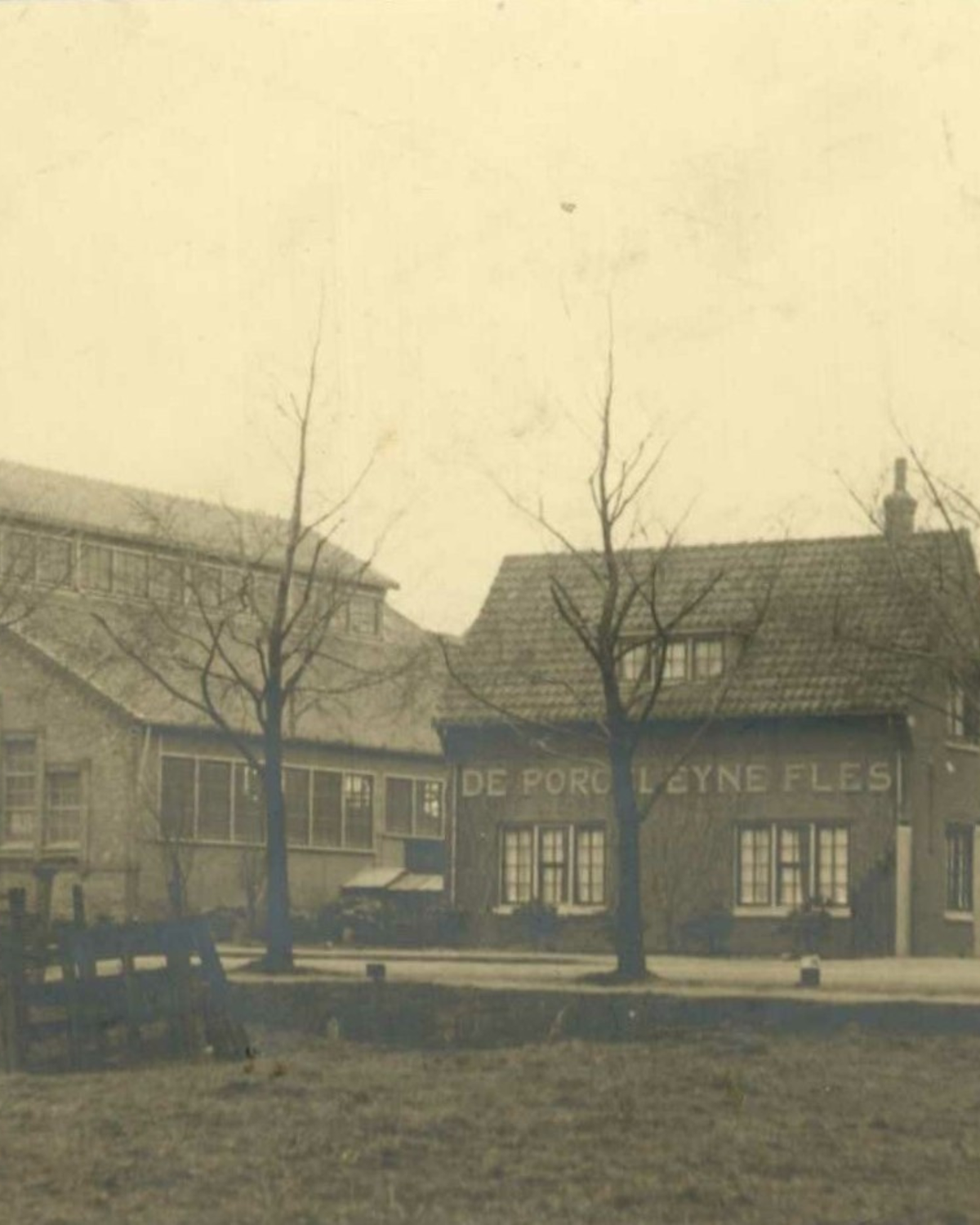
This development took place in the first half of the 17th century. Why Rotterdam and Delft came to the fore so prominently is not entirely clear. In the case of Delft, it may have had something to do with the number of vacant buildings resulting from the collapse of several breweries in the city. In 1653, ‘De Porceleyne Fles’ was founded by David Anthonisz van der Pieth at the Oosteinde in Delft. After just two years, the pottery was transferred to Wouter van Eenhoorn and Quirinus van Kleijnoven. Wouter van Eenhoorn was a businessman who had financial interests in several Delft potteries. At that time, the business owner of a company also participated in the production themselves, for example as a master potter or master painter. To do so, they first had to pass guild examinations. In 1663, Van Eenhoorn sold his share to Van Kleijnoven, who became the sole owner from that moment on. After his death in 1695, his widow continued to operate the company for a number of years, after which she sold it to Johannes Knotter in 1697. He was the first to introduce the small bottle as a trademark.

The 18th century

The 18th century

In 1701, Knotter transferred the company to Marcelis de Vlugt. He was most likely not a potter or pottery painter himself, as no pieces by him are known to exist. He must have employed the master painter Jan Sixtus van der Hoeck, who was known for his beautiful decorations. In 1750, the company passed into the hands of Christoffel van Doorne. He died in 1762, after which his son became the owner. Pieter van Doorne died in 1770, and in 1771 his widow sold ‘De Porceleyne Fles’ to Jacobus Harlees. After 70 years (since Johannes Knotter), the little bottle reappeared, and it has remained part of the well-known trademark ever since. After Harlees’ death in 1786, the factory passed into the hands of his son, Dirck. However, he could not keep his head above water during the difficult period of the French Revolution and the occupation, so he sold the factory to Henricus Arnoldus Piccardt in 1804. He was succeeded by his daughter, Geertruida Piccardt, in 1849. The Delft industry faced various difficulties during the 18th century. It began with the discovery of porcelain clay and the spread of porcelain in Europe – a product that became a difficult competitor for Delftware. This was followed in 1746 by the invention of white-firing clay by the Englishman Cookworthy. That clay produced a product that was superior to Delftware in many respects. Consequently, it was no longer necessary to apply a white-covering glaze to this earthenware, so the more refined decoration was now covered with a transparent glaze.

The 19th century

The 19th century

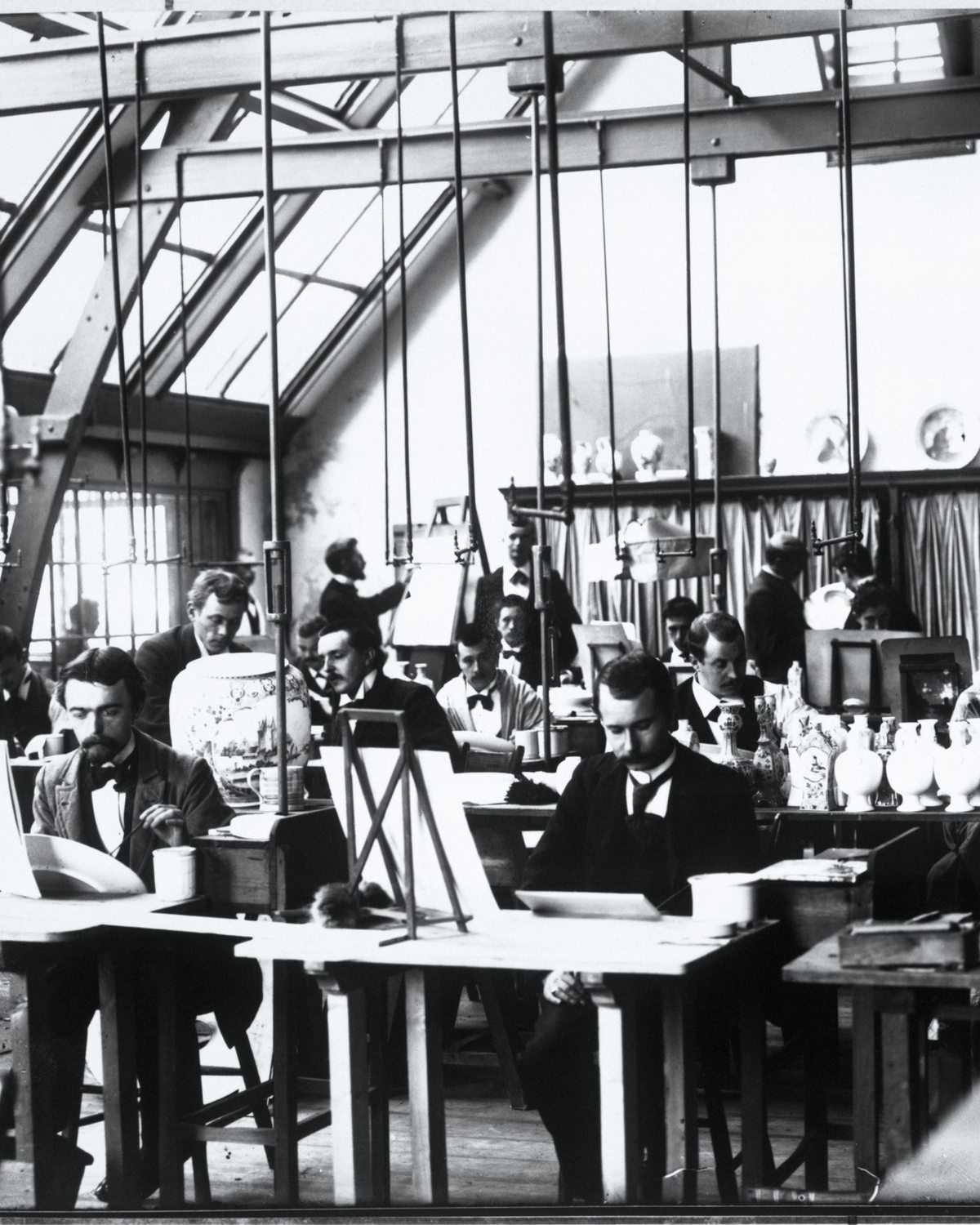
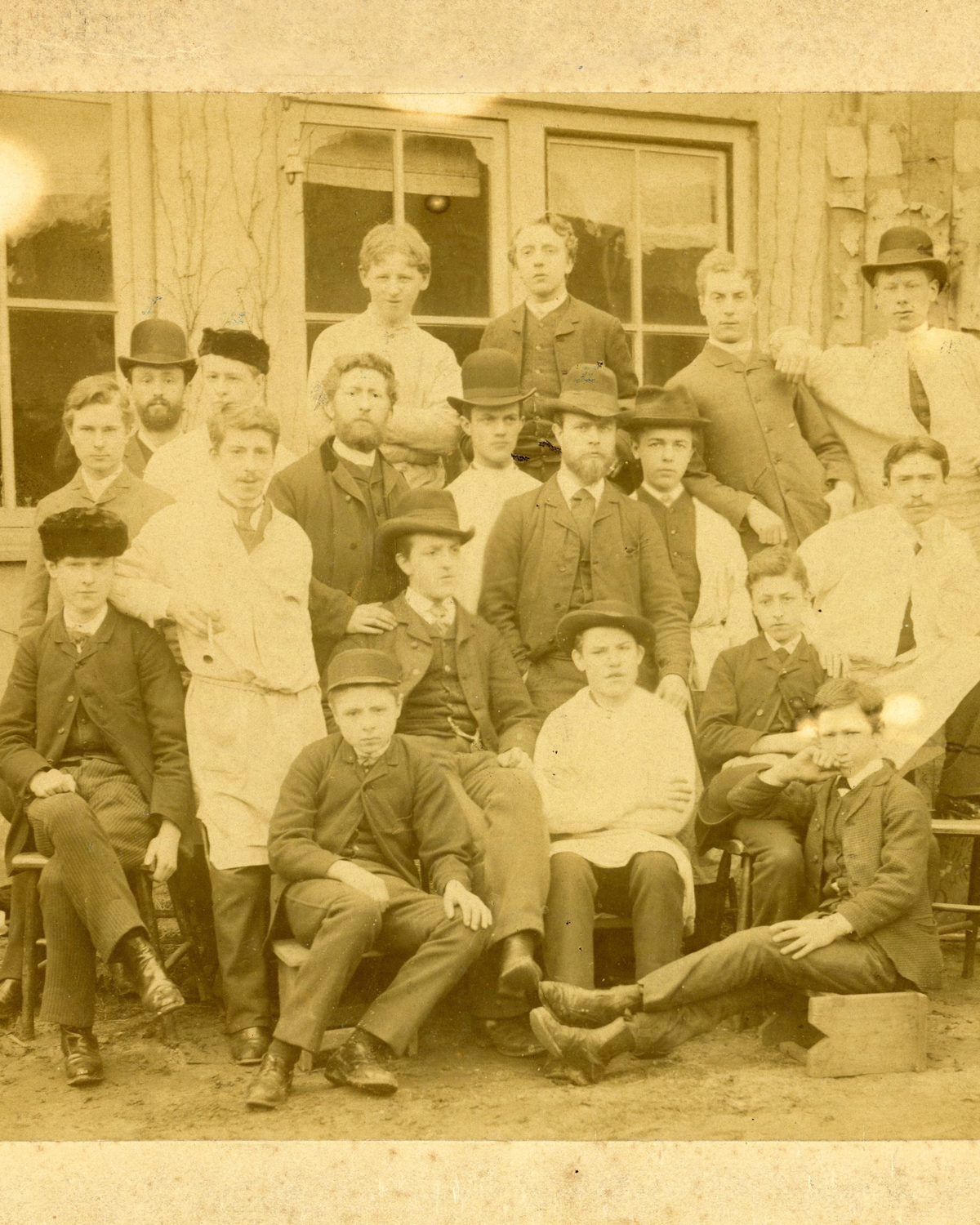
By the end of the 19th century, only a shadow remained of what was once a flourishing craft. Of all the factories, only Piccardt had managed to keep its head above water. He had largely abandoned the production of old Delftware and switched to the mass production of cheap printed earthenware. In 1876, a Delft engineer named Joost Thooft bought the factory. He wanted to restore the old craft to its former glory, but also realized that innovation was needed to make this a success. The old, fragile type of earthenware had been discredited and would certainly no longer be a success. Thooft found the solution in using a composition of white, hard, and tougher English earthenware. Together with Abel Labouchere, with whom he began collaborating in 1884, he succeeded in manufacturing a product that gained a good reputation all over the world. Joost Thooft added his monogram JT and the word ‘Delft’ to the brand. Thooft died at the age of 46, and Abel Labouchere subsequently continued the factory alone. In 1904, the company was converted into a public limited company. As a token of appreciation for the efforts the company had made since 1876 to restore the name of Delft and that of the ceramic industry, the designation ‘Royal’ was granted in 1919.

Meer historische verhalen ontdekken?

Neem een bezoekje aan Royal Delft Museum, hier ontdek je alle verhalen én loop je door de fabriek waar nog elke dag Iconisch Delfts Blauw met de hand gemaakt wordt.

Bezoek Royal Delft Museum

Verhalen over Delfts Blauw.

Ontmoet de makers.

Verhalen uit het atelier.

Nieuwe collecties, kunstenaarsprofielen en collectie-previews – één keer per maand bezorgd.